Original text here from Patrice Bernard (LinkedIn)
If insurance is a way to better control uncertainty, the current era — and the new risks it generates across multiple dimensions — seems particularly favorable to its growth. Broker Bessé is so convinced of this that it is setting up a dedicated team to explore these opportunities.
The world is now undergoing constant, accelerated transformation, regularly calling past assumptions into question — including, notably, the ability of actuaries to model the threats facing companies (in the case that concerns us here) and, consequently, to define appropriate coverage solutions. The lack of historical perspective on phenomena that are now unavoidable across all sectors makes it impossible to run the statistical calculations required to pool costs.
Subscribe to our newsletter:
In order to meet these unprecedented challenges, the “Bessé Emerging Risks” division is adopting an innovative approach that somewhat departs from industry convention. First, it will be made up of profiles that differ markedly from the usual ones, focusing more on financial analysis and data science than on traditional actuarial science. Furthermore, their main mission will center on risk analysis before the insurance itself… which, in fact, will only be one part of the potential answers.
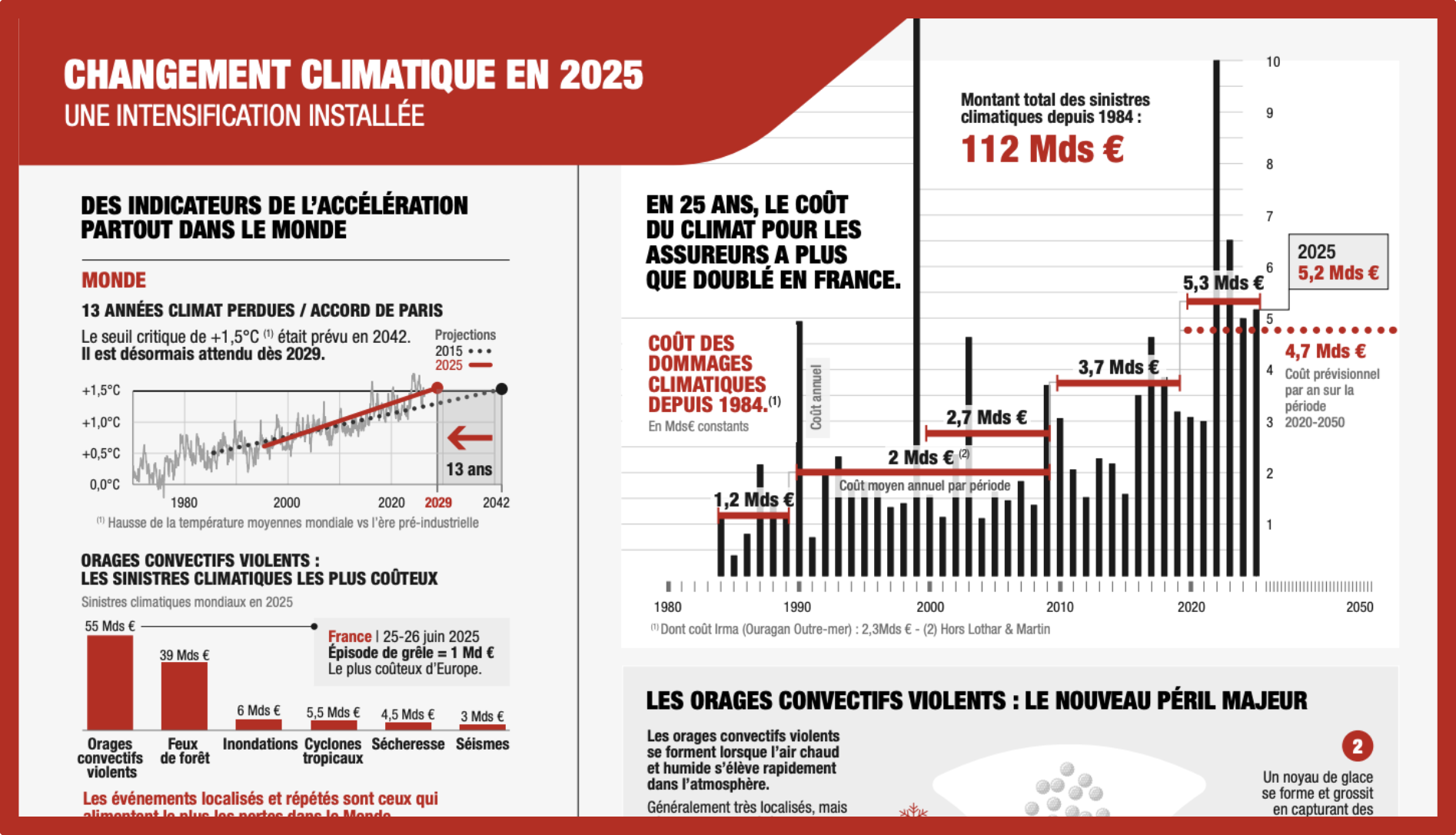
The themes under consideration are, unsurprisingly, those reshaping our daily lives. At the forefront are climate change and biodiversity loss (which, for instance, disrupt the volume of claims to be handled), geopolitical tensions and instabilities (which create day-to-day uncertainty), and evolving population behaviors (which trigger the emergence of industries with previously unknown operating models).
The official communication doesn’t mention it, but other areas are also affected. I’m thinking, for example, about the consequences of introducing technology into organizations — from automated driving to cyberthreats capable of pushing a company into bankruptcy, to algorithmic errors (with or without artificial intelligence) that can have dramatic consequences… I could also add to the list the suppliers of these ubiquitous tools (remember those AI giants that soon nobody may want to insure).
In each of these fields, the work to be done is immense and barely begun. Naturally, it starts with identifying the nature of the risks involved — a task that is not always as simple as it may seem. Next comes quantification, balancing probability of occurrence with the scale of potential damage, for which analysts will have to seek out and consolidate data sources that are often fragmented and disparate. Only then will it be possible to imagine and design suitable products — which can and generally must combine prevention and protection.
The initiative launched by Bessé is therefore essential and should concern the entire industry, which otherwise risks drifting into obsolescence. The transformation we are experiencing also means the effort will have to remain active over the long term: it would be a mistake to believe that once today’s topics are addressed, the job will be done. This outlook now makes the insurance world — historically perceived as dull and static — unexpectedly fascinating.