Original text here from Patrice Bernard (LinkedIn)
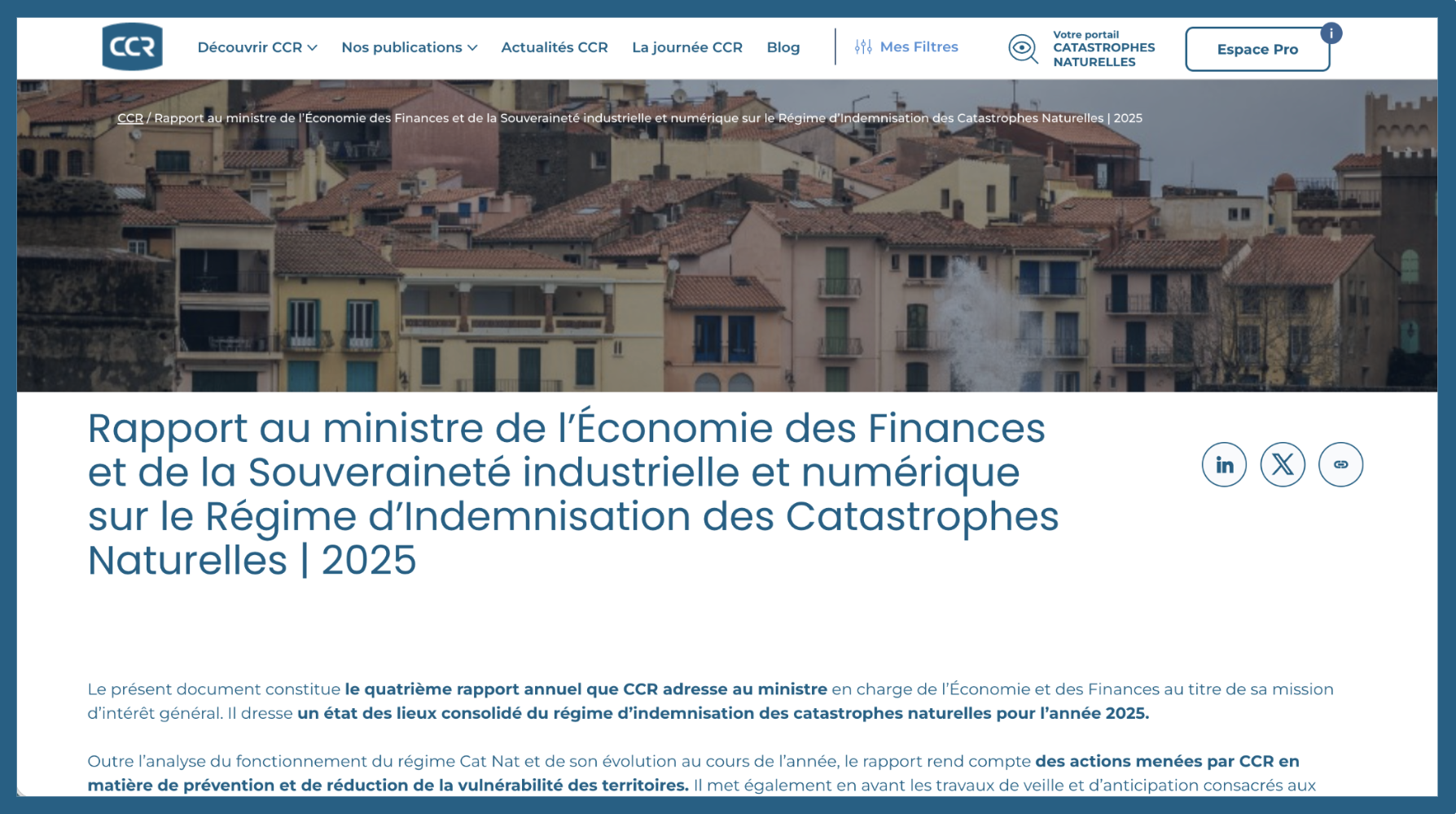
For the fourth consecutive year, the Caisse Centrale de Réassurance (CCR) — which manages France’s public natural catastrophe reinsurance regime — has published its activity report. It includes, in particular, recommendations for how the system should evolve in response to emerging risks, which appear little changed since the previous edition.
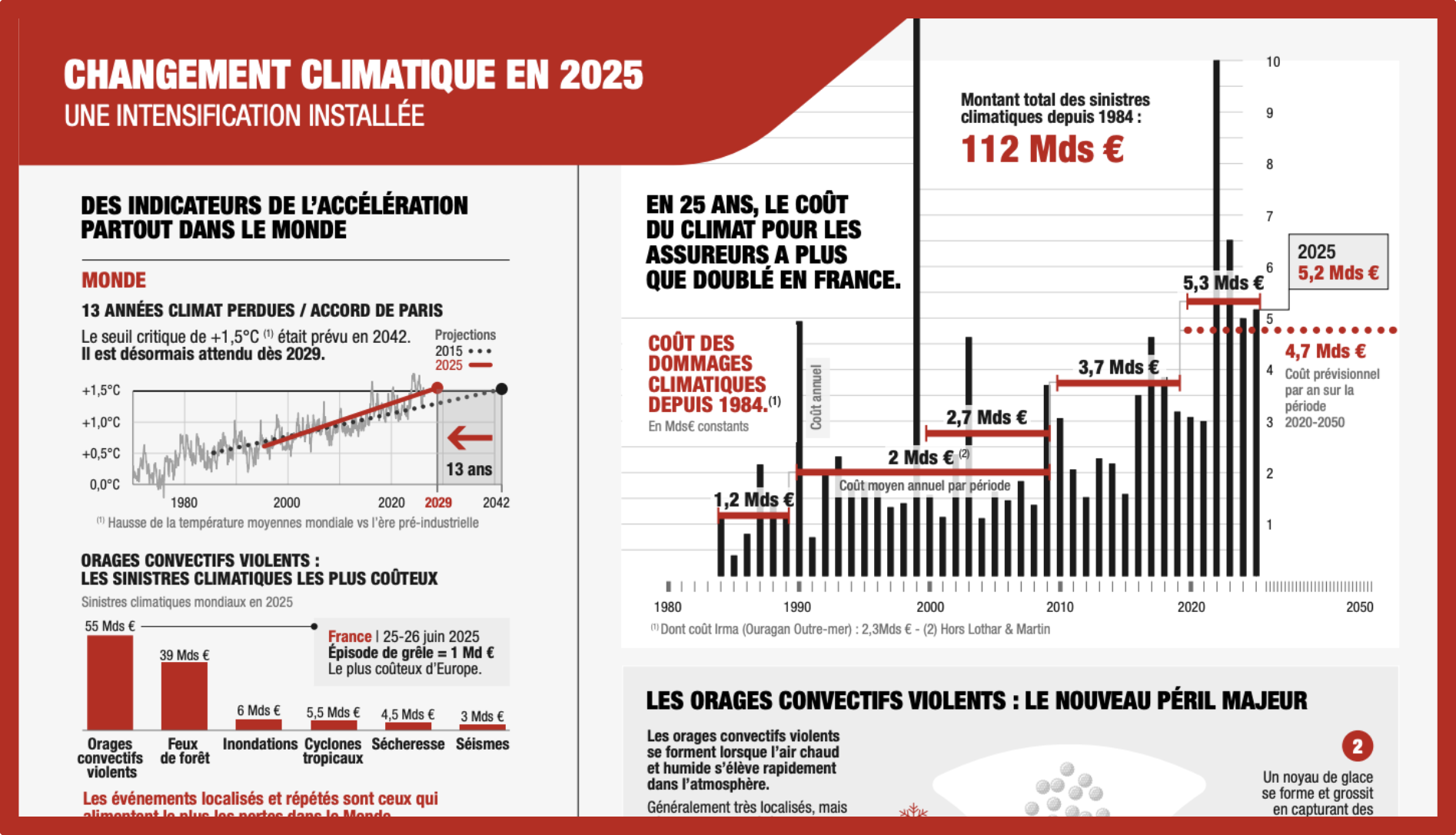
As climate change continues to increase both the frequency and intensity of the events the organization is responsible for covering, its main challenge clearly lies in its ability to fulfill its mission over the medium and long term. Unsurprisingly and quite legitimately, prevention — and, to a lesser extent, adaptation — are at the heart of the responses it proposes, both collectively and through individual responsibilities.
Subscribe to our newsletter:
On the collective front, the report suggests allocating part of the resources — funded by the mandatory surcharge imposed on private insurers — to anticipatory actions. These include national mapping efforts and specific measures to address threats such as the swelling and shrinking of clay soils, which are known to cause widespread structural damage. In the individual dimension, the idea is to impose requirements on people and companies based on hazard levels mapped by region.
The report also hints at integrating vulnerability reduction into post-claim repairs or possibly into indemnification itself, although the precise mechanisms — including whether these would be coercive — are not clearly defined.
Strategically, the recommendations go beyond merely ensuring the financial balance of the natural catastrophe regime — which naturally raises questions about its economic parameters, including cost control, the actual risks covered, and the inevitable rise in premiums. This year’s edition explicitly mentions the financing of real estate risk, a real and growing concern that has been touched on in previous discussions about the sustainability of the insurance system.
While CCR’s remit is by definition limited to its specific mandate, the vision it outlines underscores the scale of the challenges that the insurance industry faces in the era of climate disruption. Perhaps more worrying is how early stage many of the proposed reflections remain, largely consisting of studies and analyses without concrete project plans.
I suspect the picture is still incomplete — for example, by overlooking key factors such as the role of technology in prevention or, conversely, the negative impacts of future behavioral shifts. One critical issue is the increasing renunciation of insurance itself: as costs and constraints rise, some will simply go without coverage, thereby increasing vulnerability and weakening the financing of the public regime. As the report concludes, moving from analysis to action has become urgent.