Original text here from Patrice Bernard (LinkedIn)
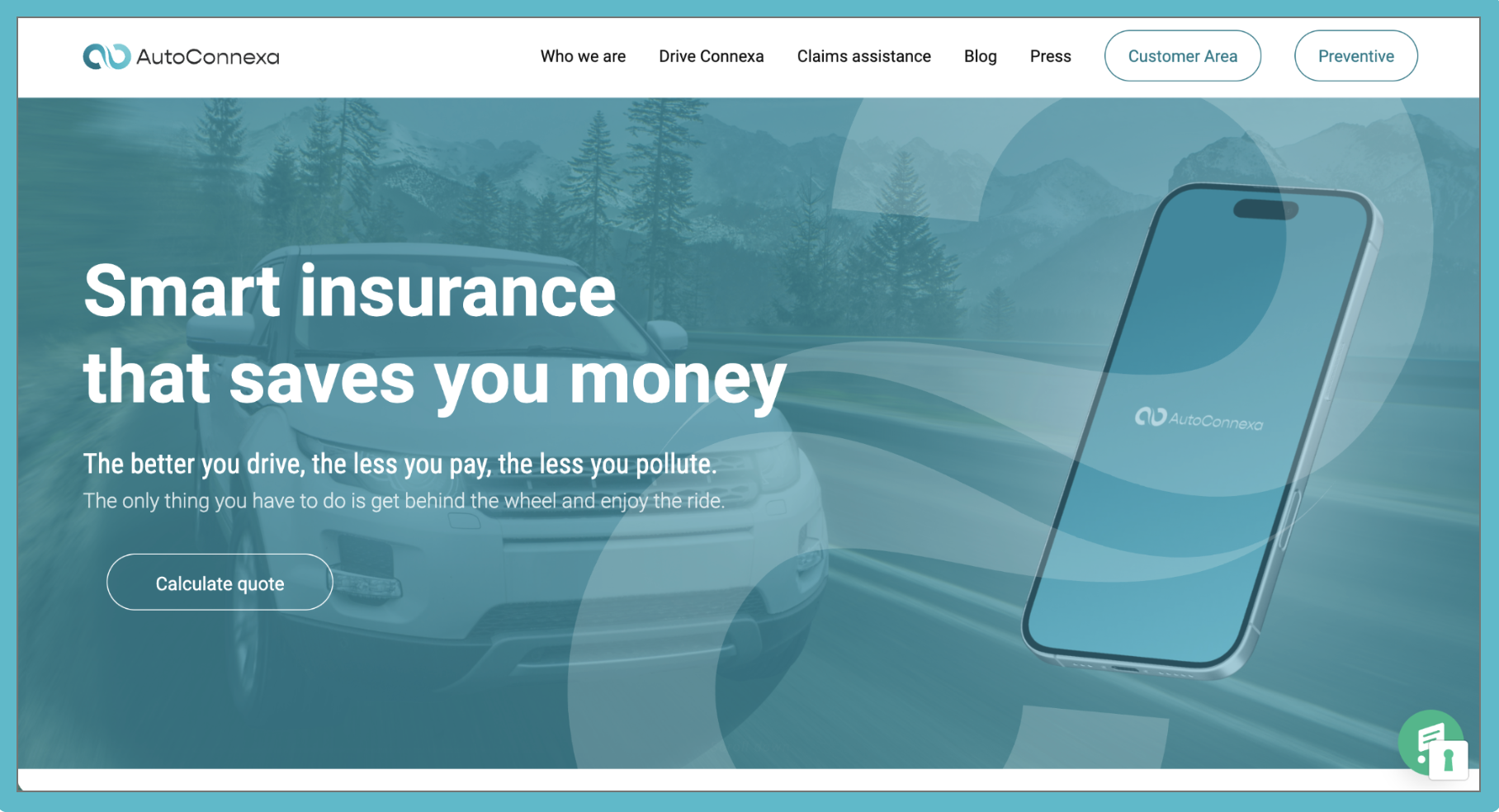
Its recent funding round—backed in part by Crédit Agricole—offers an opportunity to discover Italian startup AutoConnexa. While it builds on the long-standing concept of behavior-based car insurance, it introduces an environmental dimension that could help win over a market that has so far remained hesitant.
At first glance, the company’s solution follows the well-established principles of “Pay How You Drive” policies, which have existed for more than 15 years. An onboard device continuously measures key vehicle parameters—speed, acceleration, braking, and directional changes—to assess risk-taking behavior. Based on this data, safer drivers are rewarded with lower premiums.
From the outset, however, AutoConnexa sets itself apart. Instead of relying on a device plugged into the car’s diagnostic port or, in less intrusive (but also less precise) setups, a smartphone, it requires a small sensor to be attached to the windshield. Its need for a clear view of the road suggests that it likely incorporates a camera to perform its function effectively.
Subscribe to our newsletter:
The long history of this model offers valuable feedback, now widely available, on both its target audience and the barriers to broader adoption. Transparency around collected data—accessible through the companion mobile app—has long been recognized as essential, while educational features providing concrete driving advice are seen as a welcome addition.
However, past implementations have also revealed a ceiling in adoption, with limited appeal beyond drivers motivated by potential insurance savings. To break through that barrier, AutoConnexa is experimenting with a relatively new angle: highlighting the environmental benefits of safer driving, which may resonate more strongly with increasingly eco-conscious consumers.
As with other aspects of its solution, the startup provides few details about how this will work in practice. Ideally, one could imagine real-time tracking of a safety score (possibly enhanced with gamified elements such as badges), alongside insights into financial impact—not only on insurance costs but also on fuel consumption—and a clearer visualization of reduced carbon footprint, expressed in more tangible terms than abstract CO₂ equivalents.
Whether drivers will be convinced by this combination remains to be seen. At the very least, AutoConnexa deserves credit for learning from the limitations of earlier attempts in this space. It is not every day that a company—large or small—demonstrates such awareness of past lessons, even though doing so should be a prerequisite for any new initiative.